
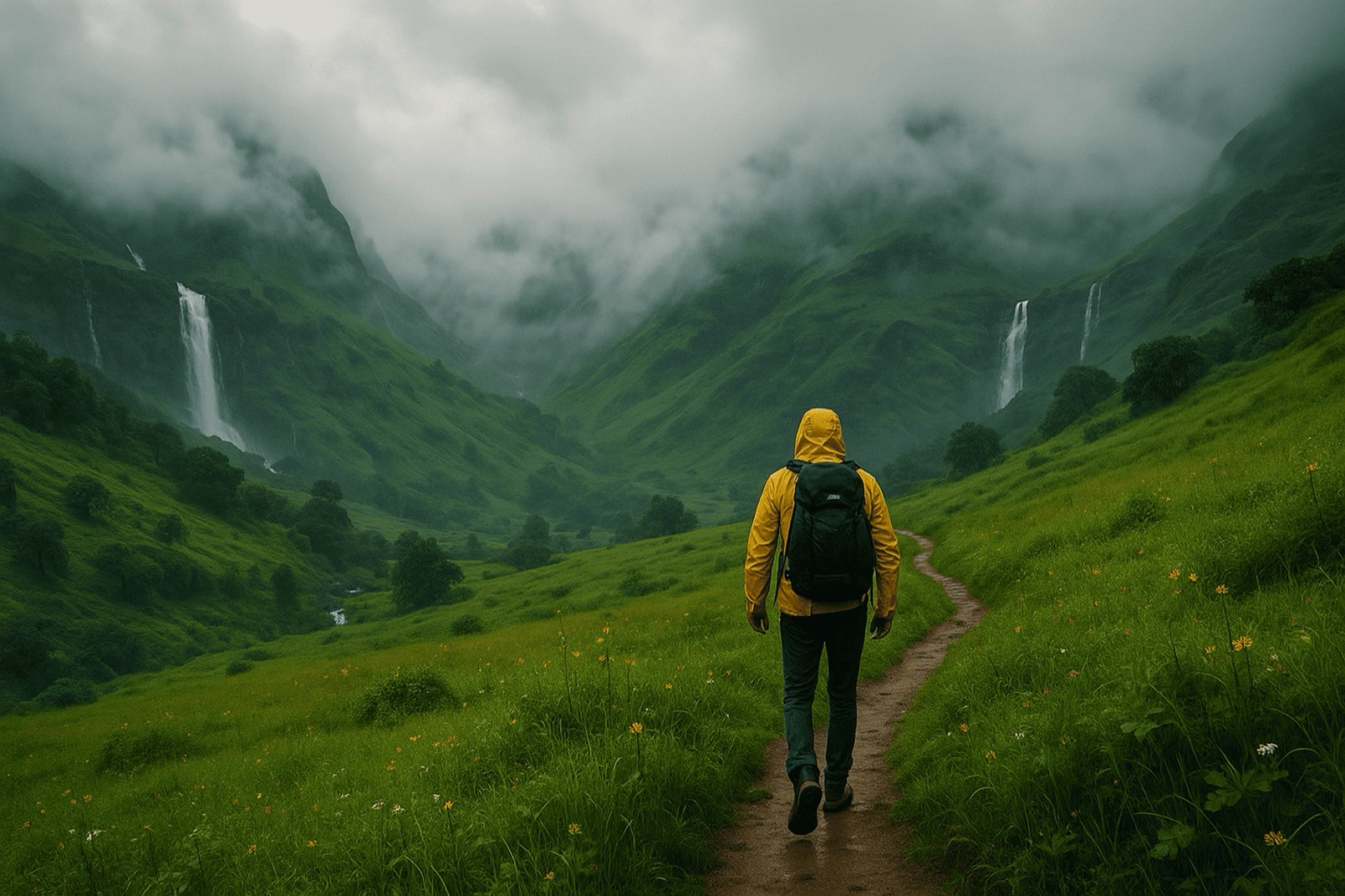
The Indian monsoon transforms the country's diverse landscapes into a verdant paradise, creating some of the most spectacular trekking experiences. While many travelers avoid the rainy season, seasoned trekkers know that monsoon months (June to September) offer unique adventures with lush greenery, cascading waterfalls, and misty mountain views that you won't find any other time of year.
Why Choose Monsoon Trekking in India?
Monsoon trekking offers experiences that dry season adventures simply cannot match. The rain breathes new life into the terrain, turning brown hillsides into emerald carpets and creating thousands of temporary waterfalls. The crowds thin out considerably, giving you more solitude on popular trails. Additionally, the cooler temperatures make challenging climbs more comfortable, and the dramatic cloud formations create photographer's paradise conditions.
The monsoon also brings out India's incredible biodiversity. Flowers bloom in abundance, from rare Himalayan orchids to carpets of valley flowers. Wildlife becomes more active, and bird watching opportunities multiply as migratory species arrive with the rains.
Best Monsoon Trek Destinations
Valley of Flowers, Uttarakhand
The Valley of Flowers National Park comes alive during monsoon like nowhere else in India. This UNESCO World Heritage Site transforms into a natural garden with over 300 species of alpine flowers blooming simultaneously. The moderate 4-day trek from Govindghat takes you through ever-changing landscapes of rare blue poppies, cobra lilies, and brahma kamal. The nearby Hemkund Sahib adds a spiritual dimension to this botanical wonderland.
Best time to visit: July to early September, when maximum flowers are in bloom. The valley remains closed during winter months due to snow.
Hampta Pass, Himachal Pradesh
Connecting the lush Kullu valley with the stark landscapes of Lahaul, Hampta Pass offers incredible diversity in a relatively short trek. The 5-day journey takes you from dense forests and meadows on one side to barren moonscapes on the other. During monsoon, the Kullu side explodes with greenery, while the rain shadow effect keeps the Lahaul side relatively dry, giving you the best of both worlds.
The trek reaches 14,000 feet but remains accessible to beginners with reasonable fitness levels. Chandratal Lake at the end provides a stunning finale to this adventure.
Dzukou Valley, Nagaland
Often called the "Valley of Flowers of the Northeast," Dzukou Valley offers a completely different monsoon trekking experience. The rolling hills covered in dwarf bamboo turn various shades of green, while seasonal flowers create natural carpets. The relatively easy 2-day trek from Viswema village suits beginners and offers insights into Naga culture along the way.
The valley's unique ecosystem and the famous Dzukou lily make this a must-visit for nature enthusiasts. The moderate rainfall compared to other northeastern regions makes it ideal for monsoon trekking.
Rajmachi Fort Trek, Maharashtra
Perfect for beginners and weekend warriors from Mumbai and Pune, Rajmachi offers history with natural beauty. The ancient fort complex becomes even more mystical when shrouded in monsoon clouds. The trek can be completed in a day, but staying overnight in the village below allows you to experience the fort at sunrise when clouds drift through the ramparts.
Two routes exist: the easier one from Lonavala (15 km) and the shorter but steeper route from Karjat. Both become incredibly scenic during monsoon with numerous waterfalls along the way.
Pin Parvati Pass, Himachal Pradesh
For experienced trekkers seeking a challenging monsoon adventure, Pin Parvati Pass delivers an unforgettable experience. This 11-day trans-Himalayan trek connects the Parvati Valley with Spiti's Pin Valley. While parts of Spiti remain dry due to rain shadow effect, the Parvati side showcases monsoon beauty at its finest.
The trek crosses the challenging 17,450-feet pass and requires excellent fitness and some mountaineering skills. The reward includes diverse landscapes from lush forests to glaciers and high-altitude deserts.
Essential Tips for Safe Monsoon Trekking
Gear and Equipment
Proper gear becomes crucial during monsoon treks. Invest in quality rain protection including a waterproof jacket with sealed seams, rain pants, and pack covers. Choose quick-drying synthetic or merino wool clothing over cotton. Waterproof your electronics and important documents using dry bags or zip-lock pouches.
Good trekking shoes with aggressive grip patterns prevent slips on wet rocks and muddy trails. Consider carrying trekking poles for additional stability. Gaiters help keep your feet dry when walking through wet grass and shallow streams.
Safety Considerations
Monsoon trekking requires extra precautions. Always check weather forecasts and be prepared to modify plans if heavy rainfall is predicted. Avoid camping near rivers or in valleys where flash floods can occur. Lightning poses risks at high altitudes, so plan to be below treeline during afternoon thunderstorms.
Leeches are common in many monsoon trekking areas. Carry salt or tobacco to remove them and wear full-length pants tucked into socks. The increased humidity can lead to fungal infections, so keep feet dry and change socks regularly.
Health and Fitness Preparation
Start fitness training at least 6-8 weeks before your trek. Focus on cardiovascular endurance and leg strength. Practice hiking with a loaded backpack on inclined surfaces. Acclimatization becomes even more important during monsoon as clouds can hide altitude symptoms.
Pack a comprehensive first aid kit including blister treatment, anti-fungal powder, and medications for altitude sickness. Water purification tablets are essential as water sources can become contaminated during heavy rains.
Responsible Monsoon Trekking Practices
Monsoon ecosystems are particularly fragile. Stay on designated trails to prevent erosion and damage to vegetation. Many flowers and plants are rare or endangered, so resist the temptation to pick them. Carry all waste out with you, as decomposition slows in wet conditions.
Support local communities by hiring local guides and staying in homestays where available. They possess invaluable knowledge about weather patterns and safe routes during monsoon conditions. Purchase supplies locally to contribute to the mountain economy.
Booking Your Monsoon Trek
While some treks can be done independently, hiring experienced guides familiar with monsoon conditions enhances safety and enriches the experience. Book with established trekking companies that provide proper equipment and have emergency evacuation plans. Many offer monsoon-specific packages with appropriate gear included.
Group sizes tend to be smaller during monsoon, providing a more intimate experience. Book accommodations in advance for popular treks like Valley of Flowers, as availability can be limited. Consider purchasing comprehensive travel insurance that covers high-altitude trekking and emergency evacuation.
Conclusion
Monsoon trekking in India offers rewards that far outweigh the challenges for well-prepared adventurers. From the flower-carpeted meadows of the Himalayas to the misty peaks of the Western Ghats, each trail reveals a different facet of India's natural beauty during the rainy season. With proper preparation, respect for nature, and an adventurous spirit, monsoon treks create memories that last a lifetime.
Whether you're drawn to easy valley walks surrounded by flowers or challenging high-altitude passes, India's monsoon treks cater to every skill level. The key lies in choosing the right trek for your abilities, preparing thoroughly, and embracing the unique beauty that only the monsoon can provide. As the ancient Sanskrit saying goes, "Megh se preet" (love for clouds) - let the monsoon clouds guide you to your next great adventure in the Indian mountains.